 bhealth
Author Archives: bhealth
bhealth
Author Archives: bhealth
Well this is a real bummer, now a new report by the UK government is saying we should stop believing that drinking red wine is good for our health, for those among us who like a couple of glasses with dinner this is one depressing article but I still recommend you read it:
If you drink it for the health benefits, it may be time to reconsider.
Suddenly, justifying that third glass of wine by telling yourself it’s healthy may prove difficult: A new report just issued by the UK government is turning long-held notions about the health benefits of red wine upside down.
It’s long been accepted that moderate consumption of red wine is heart-healthy, thanks in no small part to a 1991 60 Minutes report on the so-called “French Paradox” in which reporter Morley Safer declared that the French may enjoy lower rates of heart disease due to a diet high in cheese and wine, particularly red.

red wine
But now, the UK government is singing a different tune: This morning, the Chief Medical Officer issued new guidelines for alcohol consumption which warn that drinking any amount of alcohol — including that half-drunk bottle of Cab currently languishing on your kitchen counter — increases the risk of a number of types of cancer, including breast cancer. And the widely accepted notion that moderate alcohol consumption benefits heart health? According to the new report, that only applies to women 55 and over.
And that’s not all: “In the greatest overhaul of official medical advice on alcohol in 20 years, men are now being advised to drink the same level of alcohol as women — no more than six or seven pints [of beer], or small glasses of wine, a week,” The Independent points out.
The UK’s advice for pregnant women has also changed: While previously it was said that a drink or two a week was fine, now it’s been declared that “no level of alcohol is safe to drink in pregnancy.” (Meanwhile, U.S. dietary guidelines already say that pregnant women should not drink any alcohol.) Overall, the report concludes, “there is no justification for drinking for health reasons.”..
Just in case you did miss this recent dietary guideline update please make sure to read the following excerpt. As usual I have included the link to the original article as it appeared in the new just 2 days ago
Some Americans may not have to cut back on eggs and salt as much as they once thought, and eating lean meat is still OK. But watch the added sugars, especially the sugary drinks.
The Obama administration’s new dietary guidelines, released Thursday, back off the strictest sodium rules included in the last version, while still asserting that Americans consume too much salt. The guidelines reverse previous guidance on the dangers of dietary cholesterol and add strict new advice on sugars.
After a backlash from the meat industry and Congress, the administration ignored several suggestions from a February report by an advisory committee of doctors and nutrition experts. That panel suggested calling for an environmentally friendly diet lower in red and processed meats and de-emphasized lean meats in its list of proteins that are part of a healthy diet.
But, as in the previous years, the government still says lean meats are part of a healthy eating pattern.
Released every five years, the guidelines are intended to help Americans prevent disease and obesity. They inform everything from food package labels to subsidized school lunches to your doctor’s advice. And the main message hasn’t changed much over the years: Eat your fruits and vegetables. Whole grains and seafood, too. And keep sugar, fats and salt in moderation.
This year, one message the government wants to send is that people should figure out what type of healthy eating style works for them, while still hewing to the main recommendations. The Agriculture Department, which released the guidelines along with the Department of Health and Human Services, is also releasing a tweaked version of its healthy “My Plate” icon to include a new slogan: “My Wins.”
“Small changes can add up to big differences,” said Agriculture Secretary Tom Vilsack.
One new recommendation is that added sugar should be 10 percent of daily calories. That’s about 200 calories a day, or about the amount in one 16-ounce sugary drink…
For those who struggle with their weight which I guess must be about 6 out of 10 people , here’s a book you might want to read too:
David Ludwig often uses an analogy when he talks about weight loss: Human beings are not toaster ovens. If we were, then the types of calories we consumed would not matter, and calorie counting would be the most effective way to lose weight.
Dr. Ludwig, an obesity expert and professor of nutrition at the Harvard T.H. Chan School of Public Health, argues that weight gain begins when people eat the wrong types of food, which throws their hormones out of whack and sets off a cycle of cravings, hunger and bingeing. In his new book, “Always Hungry?,” he argues that the primary driver of obesity today is not an excess of calories per se, but an excess of high glycemic foods like sugar, refined grains and other processed carbohydrates.
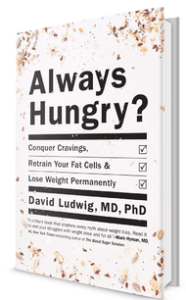
Recently, we caught up with Dr. Ludwig to talk about which foods act as “fertilizer for fat cells,” why he thinks the conventional wisdom on weight loss is all wrong, and long-term strategies for weight loss. Here are edited excerpts from our conversation.
Q. What is the basic message of your book?
A. The basic premise is that overeating doesn’t make you fat. The process of getting fat makes you overeat. It may sound radical, but there’s literally a century of science to support this point. Simply cutting back on calories as we’ve been told actually makes the situation worse. When we cut back on calories, our body responds by increasing hunger and slowing metabolism. It responds in an effort to save calories. And that makes weight loss progressively more and more difficult on a standard low calorie diet. It creates a battle between mind and metabolism that we’re doomed to lose.
Q. But we’ve all been told that obesity is caused by eating too much. Is that not the case?
A. We think of obesity as a state of excess, but it’s really more akin to a state of starvation. If the fat cells are storing too many calories, the brain doesn’t have access to enough to make sure that metabolism runs properly. So the brain makes us hungry in an attempt to solve that problem, and we overeat and feel better temporarily. But if the fat cells continue to take in too many calories, then we get stuck in this never-ending cycle of overeating and weight gain. The problem isn’t that there are too many calories in the fat cells, it’s that there’s too few in the bloodstream, and cutting back on calories can’t work…
Here’s an excerpt of an excellent article which was just published in the English quality newspaper The Guardian which I highly recommend you read for I am sure you will find it very interesting as well:
Let’s start with the sub headline:
So many of our anxieties around diet take the form of a search for the perfect food, the one that will cure all our ills. Eat this! Don’t eat that! We obsess about the properties of various ingredients: the protein, the omega oils, the vitamins. But nutrients only count when a person picks up food and eats it. How we eat – how we approach food – is what really matters. If we are going to change our diets, we first have to relearn the art of eating, which is a question of psychology as much as nutrition. We have to find a way to want to eat what’s good for us.

Our tastes follow us around like a comforting shadow. They seem to tell us who we are. Maybe this is why we act as if our core attitudes to eating are set in stone. We make frequent attempts – more or less half-hearted – to change what we eat, but almost no effort to change how we feel about food: how well we deal with hunger, how strongly attached we are to sugar, our emotions on being served a small portion. We try to eat more vegetables, but we do not try to make ourselves enjoy vegetables more, maybe because there’s a near-universal conviction that it is not possible to learn new tastes and shed old ones. Yet nothing could be further from the truth.
All the foods that you regularly eat are ones that you learned to eat. Everyone starts life drinking milk. After that, it’s all up for grabs. From our first year of life, human tastes are astonishingly diverse. But we haven’t paid anything like enough attention to another consequence of being omnivores, which is that eating is not something we are born instinctively knowing how to do. It is something we learn. A parent feeding a baby is training them how food should taste. At the most basic level, we have to learn what is food and what is poison. We have to learn how to satisfy our hunger and also when to stop eating. Out of all the choices available to us as omnivores, we have to figure out which foods are likable, which are lovable and which are disgusting. From these preferences, we create our own pattern of eating, as distinctive as a signature…
Discover just how beneficial yoga can be for your health. You probably already know that yoga can give you a good workout in only a few minutes a day. However, to make the most of your practice, there are a few important considerations you should keep in mind so you do not get frustrated and give up.
Yoga means union, not frustration.
The goal of yoga is to bring together body and mind, not make you feel like you have no idea what you are doing and that you will never be any good at it, so why bother. Accept that you are a beginner with a lot to learn, but that it is the journey rather than reaching the destination that counts.
Set goals for your practice.
“I want to get more fit,” is a typical statement most people will say at least once in their lives, especially if they are trying to set a New Year’s resolution. The trouble is that the goal is not specific enough. What does more mean, or fit? Define what they mean to you and note down your thoughts in your workout journal. Once you have set personal goals, you can start to measure them.
For example, your goal for the month might be to become more flexible in a certain area, lose X number of pounds, or be able to do Y number of a particular pose. Once you put a number to it, you can track your progress easily. The more success you have in achieving your goals, the greater your confidence.
Switch off your inner critic.
Go from, “No I can’t,” to “I’ve got this,” or “Wow, I did it!”
Remember that yoga is more than just a lot of poses.
Yoga may seem like an endless number of asanas, but a good practice should be balanced in terms of breath work and meditation as well. If you’ve been popping out the poses in your flow yoga, try a different style such as Kundalini, take more time with your breath, or do Yoga Nidra meditation to check in on your body and mind.
Choose the right studio.
Chances are there will be several near you. Take an introductory class, meet the students and teachers, and decide if they are the kind of people you would like to spend time with and who can help you achieve your goals.
Use these tips to make sure you get the most from your yoga practice and see what a difference it can make to your health and fitness.
Practicing yoga is one of the best ways to improve not just your body, but your mind. It can improve concentration and focus, so you can become more productive at home, work, school and so on. For those worried about their memory, or who wis to work smarter, not harder, it might be time to hit the yoga mat and meditation cushion.
Yoga is not just about physical poses. It also involves breath work and meditation. Having said that, it does require a good deal of attention to execute some of the poses correctly without falling over, such as Eagle, Garland, and Tree. This will increase your balance and flexibility in both body and mind.
In terms of concentration, a range of studies have all come to the conclusion that yoga can improve brain function, concentration, and focus. One study showed that after a yoga session, compared with aerobics or no exercise at all, the participants were able to process information quickly, more accurately, learn better, and retain the information they had acquired.
Yoga helps concentration and focus because it allows thoughts and feeling to rise and fall like the waves of an ocean without follow them. Yoga also reduces ‘mind chatter’ that can distract you from getting your work done. Since it encourages every student to begin where they are in terms of their level of health and fitness, many yoga students also get to turn off their ‘inner critic’ and just do the best they can without trying to achieve any outcome.
Most yoga studios are quiet havens of concentration and contemplation. Your yoga class might be the only time of day you get away from your cell phone, email and iPod. This peacefulness can give your mind space to expand rather than be bombarded continually by external stimuli.
Yoga is also a great stress reliever. We tend to a lot better at work if we are not under continual pressure that brings our stress levels to boiling point.
Yoga helps heal our body. As the old saying goes, a healthy body, a healthy mind.
If you’re worried about your memory or how hard it seems to focus on even the simplest tasks, try yoga and see what a difference it can make to your concentration.
If you are tired of feeling sluggish, depressed or disappointed in your appearance, it has to do mostly with your diet. You know the saying, “Garbage in, Garbage out.” There is a solution, but it takes you to make a decision. The decision is to break out from your unhealthy eating habits and start making changes for a healthier lifestyle.
Number One – Quinoa

quinoa salad
Number Two – Lemon
Instead of having soda or fruit juice every lunch, drink lemon water instead. Lemons are packed with vitamin C, fiber, calcium, iron, magnesium and potassium. They contain more potassium than apples and grapes. Because of the high levels of vitamin C that lemon contains, it can help strengthen the immune system, support brain and nerve function, cleanse your system, fight viral infections and improve digestion.
Number Three – Blueberry
This super fruit is known for its antioxidants properties. Blueberries contain more antioxidants than most fresh fruits and vegetables. They help strengthen the immune system by reducing free radicals from exposure to smoke, pesticides and toxins. Aside from a stronger immune system, eating blueberries can help slow down vision loss, break down belly fat and support bone health.
Number Four – Broccoli
This vegetable is packed with folate and phytonutrients. It is also rich in vitamin C, an antioxidant that eliminates free radicals that can damage cells in the body and vitamin A that is linked to good eyesight. Broccoli is an excellent source of calcium, potassium, magnesium and vitamin K as well. A cup of this vegetable boosts the immune system with its high amounts of beta-carotene and trace minerals such as zinc and selenium.
Number 5 – Salmon
If you don’t like fish maybe you will change your mind when you find out the health benefits of salmon. This superfood is good for your heart. It is a rich source of omega-3 fatty acids which can help lower your cholesterol. Eating salmon can also help speed up your metabolism, prevent muscle degeneration, and multiple sclerosis as well as cancer. Just two servings of this tasty fish every week will allow you to reap its full benefits to your heart health and overall well being.
Number 6 – Potatoes
Potatoes are a healthy root food with loads of butter and other dairy condiments. Potatoes are packed with protein, calcium, niacin and vitamin C. The vitamin C can help repair cell damage.
This nightshade vegetable can also be eaten to relieve inflammation in the intestines and digestive track. Potatoes can also help improve brain functions because of its Omega-3, vitamin B complex and amino acids contents.
Number 7 – Spinach

spinach salad
Belly fat always ranks high on the list of weight loss targets for men and women of all ages. Many times, it seems to stubbornly refuse your best efforts at banishing it. Even if you have failed in your belly fat battle in the past, the following 10 tips will have you furnacing the flab, losing the love handles and discovering that beach body, six pack abs look that is hiding just beneath your belly fat right now.
1 – Fiber fuels belly fat burning. A high fiber diet regulates a healthy digestive system. This means you process fat instead of storing it. Eat nuts, vegetables, whole grains, legumes, seeds and fruits, aiming for 25 grams (g) of fiber per day for women, 38 for men.
2 – Drink lots of water. A properly hydrated body keeps all of your internal systems working efficiently. This means a lower chance of you storing fat, a healthy metabolism that burns fat and calories properly, and very little belly fat that results from an unhealthy digestive system. Most health professionals and fitness experts agree 6 to 8 glasses of water a day is sufficient for proper hydration.
3 – Sleep 6 to 8 hours each and every night. When you start the day tired you fill your coffee with sugar. You grab sweet, sugary, energy-boosting snacks and drinks throughout the day. That sugar gets stored as fat. Studies have shown that there is no “catching up” when you miss sleep either. So make sure you get plenty of rest nightly.
4 – Increase your protein levels at meals. Getting 20 to 25 g of protein each meal is a good idea to keep belly fat at bay. Shoot for 10 to 20 g of protein per snack as well. Those are good numbers for women, and men may want to add 5 or 10 g of protein to those recommendations. Constant protein doses throughout the day keep your blood sugar balanced and insulin levels low, meaning that your body handles appetite control and fat loss properly.

5 – Just say no to stress. Sometimes you cannot control the stress you encounter. In many cases however, you create your own stress. The cortisol which is released as a stress response can cause you to overeat, and even decreases your ability to lose fat in your belly and elsewhere on your body.
6 – Remember this weekly exercise rule – 3 to 5 times for 20 minutes. That is all you need to burn calories and fat, crank up your metabolism and begin building lean muscle mass. Muscle burns fat and calories quicker than fat does. Don’t worry, you do not need to develop a muscled bodybuilder physique to benefit from this belly fat busting tip. Just make sure that strength and aerobic training at a moderate to intense level become a part of your weekly exercise regimen.
7 – Cut back on the salt. Limiting your sodium intake delivers a lot of health benefits. It can cut down on your risk of contracting heart disease, strokes and cancer. It also causes you to bloat, and is often in extremely high concentrations in processed, fatty food. Try not to eat more than 500 mg of sodium per meal, aiming for no more than 1,600 to 2,200 mg of sodium daily.
8 – Don’t believe the sugar-free weight loss fallacy. Sugar-free foods and drinks typically contain artificial sweeteners that are not processed properly by your body. These chemical fats go straight to your belly, and can lead to a long list of cardiovascular and digestive problems. Avoid the misleading phrases sugar-free and fat-free, especially in highly processed foods (any food with a wrapper).
9 – Eat more often. Seriously, the old “3 big meals a day” nutrition guidelines are a fat booster. You burn more belly fat, and fat all over your body, when your metabolism is cranked up. This happens every time you eat. Accompany 3 main meals with sensible portions with 2 or 3 snacks every day. Just do not overeat. Make sure that those 5 or 6 daily meals/snacks hit your target caloric intake, and your metabolism will be crunching calories and burning fat all day long.
10 – Cut back on the beer and alcohol. The term “beer belly” is not really accurate. It makes you think that drinking beer causes belly fat. That is just not the case. A glass of wine, an alcoholic beverage or a couple of beers 2 or 3 times a week will not promote weight gain. The problem is when several alcoholic drinks or beers are consumed in one sitting. Just like any other calories, beer calories add up quickly if you are not careful. A single beer has between 130 and 180 calories, so you can enjoy one now and then, but don’t overdo it.
Click here to discover the system that’s helped millions of people lose weight
Yoga can relieve stress in a number of ways. If you’re feeling like you’re running as fast as you can just to stand still, it’s time to tune out with the help of yoga in order to relieve your stress and get your life back in balance.
Here are a few of the ways yoga offers relief from stress:
Putting yourself first for a change.
We all have a range of demands upon our time each day, but how much time do we put aside to care for ourselves? Make an appointment on your calendar for yoga each day and treat it as seriously as a doctor’s appointment, and see what a difference it can make to your stress levels.
Peace and quiet.
Yoga studios are usually quiet place that allow you to tune out of all the media that surround you, including your cellphone, email and so on. This can help you feel a lot less frazzled.
Mindfulness and concentration
Once you have tuned out all the media surrounding you, it will be time to look within. You can improve your mindfulness by not trying to multi-task all the time. You will just be concentrating on one thing, a pose, breath work, or meditation. Better concentration means stress will not have as strong an impact upon you. The unexpected or a busy day at work will be a lot less likely to knock you off your stride.

yoga classes
Breath work
When we are stressed, we tend to hold our breath and/or breathe shallowly. Yoga breath work, known as pranayama can help you breathes better in order to clean toxins out of your body and refresh and renew body and mind. Pranayama means to move energy, so if you are feeling like a flat battery or a pressure cooker about to explode, stop letting stress get the better of you by paying attention to your breath.
Meditation
Meditation improves your mental focus and is a mini-vacation from your stress because you are looking within and starting to control the ‘mind chatter’ that most of us live with but which can be exhausting.
If you’ve been feeling so stressed lately it is hard to think straight, try yoga poses, breath work and meditation and see what a difference it can make to your body, mind and spirit.
For those of you who thought working out was just good for your waistline and general condition there is now another very good reason to consider adding that fitness goal to your new year’s resolutions, read on to discover how your brain performance will benefit from you being fit!
The most persistent theme in exercise science in 2015 was that to live long, age well and maintain both a nimble mind and shapely brain, we must be physically active, but not for as long as many of us might fear or in the ways that many of us might guess.
Certainly the most encouraging exercise research this year focused on the links between regular exercise and improvements in our thinking and the structure of our brains. I’ve often written in past years about how exercise — usually running, especially in animal studies — increases the number of new neurons in the brain and sharpens thinking skills and mood, especially as we age.

But this year, interest among scientists in exercise and brain health seemed to reach a critical mass. Many of the new studies highlighted previously unexplored ways in which exercise changes our brains and minds. One of my favorites was a brain-scan study in which Japanese scientists found that the brains of fit older men were almost as efficient as the brains of young people.
This finding meant, in practice, that the aerobically fit older men’s brains used fewer resources during thinking than the brains of out-of-shape men of the same age, much as a fit body can use less energy to perform the same physical task as one that is less fit. This study introduced me to a cautionary scientific acronym, Harold, for hemispheric asymmetry reduction in older adults, a weakening of the function of aging brains that I now fervently hope to avoid or lessen by regularly working out…